





Are you ready to grow your business?

What Is The EU Blue Card: An Overview Of Europe’s Skilled Migration Visa

Written By:

Gino Peters

Reviewed By: Belinda E.

May 17, 2026 3:11 am

Category Tag: News

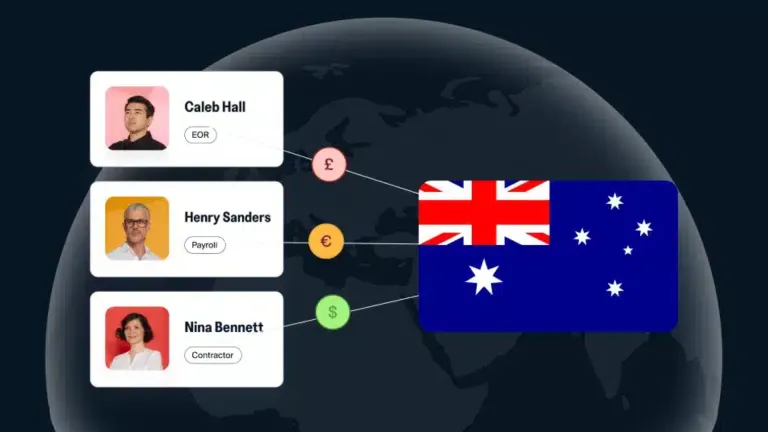
The rise of remote work made international expansion much easier in recent years, but hiring abroad still comes with legal and administrative complexity, as every country has its own labour laws and payroll rules that must be followed. In addition, not many companies can open a new entity in every new market that they are expanding into. That is when the Employer of Record (EOR) solution comes in handy. 

The EOR serves as the legal employer on paper, while the client company manages important activities related to the employees responsibilities and performance. 

In this guide we will cover what an employer of record is, how it works in detail, how much it can cost and which business should consider an EOR solution. 

What is an Employer of Record (EOR)?

An Employer of Record (EOR) is a third party service provider that legally employs a person on behalf of another company in the country where the employee officially resides. As an official employer the responsibilities of EOR include issuance of an employment contract, processing payroll and withholding taxes and necessary social security contributions, as well as preparation of offboarding documents or any documentation that need to be signed by the employer. In addition, EOR ensures the compliance with local labour laws and serves as a first point of contact for any legal disputes. 

The client company that hired the employee through an EOR also has a list of responsibilities. As an Employer of Record does not have the visibility on operational activities behind the scenes a client company needs to provide direction and ensure proper team integration. 

In simple terms, the EOR provider acts as a legal employer in the country of the employee’s residence, while the client company takes on day-to-day manager work. 

Responsibility

Employer of Record (EOR)

Client Company

Employment contracts & any other official documentation

  •  
 

Payroll processing

  •  
 

Income tax & social security contributions

  •  
 

Compliance with local labour laws

  •  
 

Statutory benefits administration

  •  
 

Managing daily work and projects

 
  •  

Setting goals and performance expectations

 
  •  

Providing equipment and tools

 
  •  

Leading the employee’s team and workflow

 
  •  

Employer of Record solutions gain more and more popularity in the field of global expansion as they allow businesses to hire best candidates fast and easy while staying compliant with local employment regulations. More information about EOR service are available if you would like to understand more.

EOR Meaning

The term “EOR” is the abbreviation for Employer of Record

Employer in this instance stands for the company that hires the employee and takes on duties related to it, such as onboarding and offboarding process, payment of wages and compliance with other legal requirements. 

“Record” from the EOR perspective refers to official registration with government authorities. The name of the EOR provider is stated in all payslips and tax filings, and should also be listed by the employee in any documents where employer must be stated, such as mortgage or loan applications. 

One might ask a question of why this legal structure exists. As it is not possible to provide an employment contract directly to a person that legally resides in another country, the business expanding abroad typically needs to establish a local entity. That involves legal registration, arrangement of local bank accounts and organisation of payroll structure, as well as compliance with local law. 

EOR allows to simplify the global hiring and reduce administrative burden through their existing legal entity. 

There are some other hiring models that can be confused with EOR. 

  • EOR and PEO 

Many sources online refer to EOR as “international PEO”, which may create confusion as these models have 1 important difference. 

A Professional Employer Organisation (PEO) serves as a co-employer of a client company. In other words, a business must already have an established entity in the country. The hiring tasks are, therefore, shared between 2 companies, while legal liability stays only with the client company. In the EOR model all legal risks are being taken by the official employer. Read more about the difference between PEO and EOR here. 

  • EOR and staffing agency 

Staffing companies mainly provide assistance for short-term projects by providing temporary workers. If the client wishes to employ a person for a longer time, EOR approach must be chosen. 

  • EOR and contractor model

Contractor agreements assume the involvement of independent workers rather than employees. This model is also often used for temporary, project-based assignments. It is important to remember that there is a big misclassification risk between a contractor and an employee in the company which can lead to potential legal issues. An EOR ensures that employment is legally compliant with local labour law. 

How does an Employer of Record work?

While it may sound complicated at first, a process behind the employer of record model is relatively straightforward. 

  1. The operating company selects a candidate 

The client company recruits the employee they want to hire in another country 

  1. The EOR becomes the legal employer & local employment contract is issued

The Employer of Record uses its local legal entity to prepare and issue an employment contract that complies with labour law of the country where the employee is based. Depending on case-by- case situation, the work visa might need to be secured beforehand. Our company provides immigration services, more details can be found here. 

  1. Payroll and taxes are managed 

The EOR takes on recurring responsibilities related to a payroll and ensures correct processing of income tax, social security contributions etc

  1. Benefits are administered

Paid leave, sick leave, pension contributions and any other statutory benefits are being managed by the EOR. 

  1. Ongoing compliance and HR support

It is the responsibility of the EOR to monitor changes in local labour law and ensure ongoing compliance. 

Example: 

Imagine a UK-based tech company found a perfect candidate in Germany for a position of a software developer. 

Instead of going through the administrative burden of opening a legal entity in Germany, the company chooses to work with an Employer of Record. The EOR hires the developer under a German employment contract and manages payroll and taxes. At the same time the UK company welcomes the new employee in the team and manages the daily work of a developer. 

What services does an Employer of Record provide?

The Employer of Record does more than just providing an employment contract to the employee. Typically a wide range of HR and compliance services is included in the EOR offer. For example, read about the services included in our EOR package here. 

  • Employment and HR administration 
  • Locally compliant employment contracts and support with other documents requested by authorities
  • Employee onboarding 
  • Employee record management. For example, control over PTO 
  • Payroll and tax management 
  • Regular payroll processing 
  • Tax withholding and reporting of social security contributions with authorities
  • Payslip generation and creation of annual wage tax certificates 
  • Benefits administration 
  • Management of statutory benefits 
  • Pension contributions (where required) 
  • Support with benefits such as maternity leave allowance, sick leave allowance etc
  • Compliance and risk management 
  • Insuring compliance with local labour law 
  • Management of onboarding and offboarding processes 
  • Representation in difficult legal and court cases 
  • Additional services:

Some EOR providers ( such as ThisWorks EOR Services) provide additional services such as: 

  • Work permit and dependent visa support 
  • Background checks 
  • Relocation support 
  • Value added services: support with housing, company car, banking, etc ( depending on the country). 

This vast list of services allows businesses to manage international teams, while staying compliant and avoiding complex local employment administration. 

Benefits of using an EOR service

There are multiple advantages the businesses can get from working with an Employer of Record provider.

  • Faster global hiring 

Setting up a new entity can take up to several months. With an EOR the hiring process can take several days. 

  • Reduced compliance risk 

A trustworthy EOR provider ensures the compliance with all local regulations. As the labour law varies greatly between countries, having a knowledgeable party to rely on can make a big difference. 

  • Lower expansion costs

Establishment of a new entity is not only a time-consuming process, but also costly. With EOR services these costs can be avoided. 

  • Access to global talent

The location of a remote candidate is not a problem if the company uses Employer of Record services. In other words, the best candidate for specific business purposes can be chosen. 

  • Scalable hiring model

EOR services are ideal for organisations that want to scale international hiring quickly. They are particularly useful in the following situations: 

  • Remote-first teams and organisations 
  • Companies testing new markets abroad 
  • Startups expanding internationally

How to choose the right Employer of Record

Choosing  between several EOR providers is important, as it influences not only compliance, but also employee experience for new hires and how your company is perceived on the job market. 

Here are some important things to keep in mind when deciding on your EOR partner:

  • Geographic coverage 

Make sure that EOR provider can cover the country where you want to expand globally. Read about our EOR coverage here.

  • Pricing transparency

Check that EOR provider does not have any hidden costs and the pricing is clearly outlined in your MSA. 

  • Compliance expertise 

A strong EOR provider should have a team of experienced local HR specialists who understands all in and outs of a national labour law. 

  • In-house vs partner model 

Some EOR providers rely on their third-party partners, while others manage employment directly through their own local entities. 

  • Customer support

It is important to find a EOR partner that helps with any questions or concerns in a quick and professional manner. That can be crucial when dealing with employee offboarding or any legal disputes.

Warning signs

Understanding the importance of choosing a right party, your company should be cautious of providers that lack local expertise and cannot give clear answers to your labour law questions. In addition, companies with slow response times can  prove to be unreliable in critical situations. Furthermore, providers with complex pricing models with many hidden fees can create a lack of cost transparency and result in unforeseen expenses. 

By selecting a provider with strong expertise in local labour law and reliable support from dedicated teams, your company can ensure a smooth international growth. Learn why companies choose ThisWorks as their EOR partner. 

How much does an employer of record cost

The vast coverage of services the employer of record provides makes many businesses ask how much an EOR costs. 

Pricing models vary greatly on the provider and the country of coverage, but most EORs use one or more of the following structures. 

  1. Flat monthly fee per employee. 

The EOR provider charges a fixed monthly fee for each employee they have on the payroll from the client. 

  1. Percentage of salary

While not being a popular approach, some EOR providers charge a percentage of the employee’s salary, typically ranging between 5%-15%. 

  1. Setup fees

Some providers charge onboarding or offboarding fee for each employee. 

The fee that the business needs to pay to an EOR provider also depend on the location of a service. Local labour law complexity of some countries can influence the fee. In addition, some countries have specific statutory benefits and payroll administration requirements. Furthermore, employee headcount in the specific location can influence the fee. 

EOR vs setting up a legal entity

To establish a new entity the organisations needs to go through legal and tax registration. In addition, accounting support and ongoing compliance costs such as the fees for local labour lawyers can make setting up a legal entity significantly more expensive. 

An EOR allows companies to expand globally without these upfront investments.

EOR vs hiring contractors

Some businesses decide to hire international workers as contractors. However, this approach can often lead to a misclassification risk, which can cause legal and tax liabilities. 

A professional EOR provider ensures that the new starters are compliantly onboarded under local employment regulations. 

 EOR FAQs

  • Is an EOR the same as a PEO?

No.  PEO model assumes co-employment and requires the business to already have established local entity, while EOR employs new talents through its own entity only. 

  • Can an EOR hire contractors?

While some EOR providers can support hiring contractors, it is important to remember that main function of EOR is the employment of full-time workers legally in a country. A risk of misclassification between EOR and contractor should be also considered carefully. 

  • Is an employer of record legal?

Yes, when established and structured properly, Employer of Record entities are legal and widely used for international expansion by many companies. 

  • When should you use an EOR?

The most common reason for using EOR include: 

  • Hiring employees located in another countries remotely
  • Testing new markets before establishing an entity 
  • Expanding internationally
  • Can you switch from EOR to your own entity?

Yes. Many companies initially hire through an EOR for the ease and speed of expansion and later transition employees to own legal entities upon their establishment. It is important to remember that some countries require specific procedure to be followed in such a scenario.

Get in touch with ThisWorks

Expanding your team globally does not need to be long and administratively complex. 

With the use of Employer of Record the businesses can have access to the best talent from around the world while ensuring full compliance with local labour laws. 

ThisWorks can support your global expansion with our compliant Employer of Record services. 

Contact our team to find our how we can help your international team glow fast and compliantly!

What is the EU Blue Card: An overview of Europe’s skilled migration visa

The EU Blue Card can be your ticket to qualified employment within the EU. It is a special residence title (section 18 of the Residence Act) for skilled labor in the EU. This is beneficial for employees and employers alike, addressing the skills gap problem by inviting capable professionals to Europe from outside of the last EU. So if you are from a non-EU country seeking a job in the EU, you have landed on the right page. In this comprehensive guide, we will define the ins and outs of the EU Blue Card, including EU Blue Card eligibility criteria and the application process.


What is the EU Blue Card?

The EU Blue Card is the answer to how the EU should deal with its increasing skill-shortage and demographic changes. It creates a unified and simplified path for specific, high-demand professions from non-EU countries to find jobs in the EU. The holder of an EU Blue Card shall be entitled to reside in the territory of that part for which it is issued, with the object of gaining employment.

The EU Blue Card is a type of permit established under Council Directive 2009/50/EC. This directive was implemented to attract third-country professionals into existing skill shortages or likely future ones within the EU. It is also the primary residence permit for foreign-graduated university students.


Advantages of the EU Blue Card

The EU Blue Card benefits are plentiful. First and foremost, it is aimed exclusively at high-skilled non-EU nationals. You can search for a job and also stay inside the country of the European Union. It offers both work and residence authorization to the holders greatly improving cross-border exploration in the EU, and opening labor market for such skilled professionals through better integration into a subset of lifestyle-based labor markets across large European regions that offer need-based employment access. All EU Member states except Denmark and Ireland are part of the EU Blue Card participating countries.

Holders of the Blue Card gain a disciplinary right to enter, re-enter, and reside in more than one country where they are granted maximum work authorization. The duration of your EU card can last between one to four years. Its stay period also depends on the employment contract you have. However, this can often be extended with a few formalities – you simply have to apply for the EU Blue Card renewal process in most countries.

Additionally, EU card holders can also easily travel through other EU member states. The EU countries include:

  • Austria
  • Belgium
  • Bulgaria
  • Croatia
  • Republic of Cyprus
  • Czech Republic
  • Estonia
  • Finland
  • France
  • Germany
  • Greece
  • Hungary
  • Ireland
  • Italy
  • Latvia
  • Lithuania
  • Luxembourg
  • Malta
  • Netherlands
  • Poland
  • Portugal
  • Romania
  • Slovakia
  • Slovenia
  • Spain
  • Sweden.

If you have a Blue Card you can travel through all of these member states for up to 90 days per 180-day period in each member state. However, if you wish to stay in another country for more than the given 90-day period, you might have to apply for a permit there. The holder can also exchange their Blue Card permit for the new country as residence in some cases.

 

Benefits for Employees 

EU Blue Card holders have the advantage of exploring various career opportunities that align with their professional interests. For employees, the favorable part is that multiple EU member states have provisions which enable Blue card holders to apply for a permanent acquisition if they are in employment in any of the countries outlined within Europe for at least one or two years. The EU blue card holders are also not limited to working with one employer. This is a great opportunity to allow employees to change employment without notifying the local authorities.

Benefits for Employers

This directive does not exclusively benefit employees. This means EU employers can also gain by hiring people with the right skills in non-EU countries. In doing so, they are tackling the skills shortage problem and streamlining visa applications. Furthermore, the semi-prestigious status of this card (in some ways resembling the US Green Card) ensures that companies can draw in talented professionals who may prefer to put down their skirts for a more stable and long-term position within Europe.

What are the EU Blue Card eligibility criteria?

The first requirement for becoming an EU Blue Card holder is that the applicants must provide evidence of a valid university degree. They must also show that they have been offered a job which gives basic annual earnings of at least 56,400 euros.

The minimum required salary varies from state to state. Some member states have stricter rules about this; others do no

The EU Blue Card Requirements for Employees:

All applicants have to meet certain criteria to be eligible for the EU Blue Card. Some of these requirements include:

  • Holding an authentic higher education qualification or a university degree
  • Employment contract with the EU employer for a minimum one year
  • Meeting the minimum earning threshold requirement for the respective EU country
  • Holding valid documents. For eg. Passport.
  • The applicant should also obtain health insurance for their stay and employment in the issuing country

The applications are submitted to the concerned authorities. It can be either in the country in case the applicant already has a residence permit, or at the appointment embassy according to the applicant’s country of domicile. An application fee is also included in most cases. You can read more on that here.

How to apply for the EU Blue Card?

 If you are wondering about the EU Blue Card application process, here is everything you need to know:

To apply for the EU Blue Card, you and your employer will have to submit the application to competent national authorities in the country you wish to work in. You will also have to present proof that your employer is offering you a salary that meets the minimum salary threshold. Depending on the requirement of the member state you are applying for, you will also have to pay an application fee. The application is typically processed within a 90-day period but can vary depending on different countries. To accelerate the visa process, you can apply for the fast-track procedure for skilled workers.

In some EU member states, employers must also conduct a labor market test before hiring a non-EU national under the EU Blue Card. This is a document that is legally demanded by the authorities once you hand in your visa application. But you can also apply for a pre-approval. If you have pre-approval, it can also reduce your waiting time once you have applied for the visa. 

For more information regarding the application process, you can visit the EU immigration portal or the government website.

Frequently Asked Questions (FAQS)

What is the EU Blue Card?

The EU Blue Card is a residence permit that allows foreign employees to apply for a job and live within the EU. This directive was introduced as a strategic solution to address the skill shortage, inviting non-EU skilled professionals to seek employment in any of the member states.

Who qualifies for the EU Blue Card?

All applicants have to meet eligibility criteria to apply for the EU Blue Card. Here are a few basic requirements to determine whether you qualify for the EU Blue Card or not:

  • Skilled professionals who have a university degree can apply for the Blue Card.  
  • You should have an employer contract for the issuing country you wish to work in
  • Your employer contract should meet the minimum salary set by the country

How to apply for the EU Blue Card?

Applying for the EU Blue card is not complicated once you have met all the requirements. You and your employer will have to submit an application form either in the country in case the applicant already has a residence permit, or at the appointment embassy according to the applicant’s country of domicile. An application fee is also included in most cases.

Which countries participate in the EU Blue Card scheme?

This is a very common question that interested applicants often ask. Here is a list of countries that participate in the EU Blue Card scheme. You can apply for a residence and work permit in any one of the following member states:

Austria, Belgium, Bulgaria, Croatia, Cyprus, Czech Republic, Estonia, Finland, France, Germany, Greece, Hungary, Italy, Latvia, Lithuania, Luxembourg, Malta, Netherlands, Poland, Portugal, Romania, Slovakia, Slovenia, Spain and Sweden.

What are the benefits of the EU Blue Card?

The biggest benefit of the EU Blue Card is that it addresses the skill gap issue in the EU by inviting foreign workers to job opportunities that lack personnel. In addition to this, there are also some other benefits for employees and students if they are Blue Card holders:

If you wish to move to a different state or seek employment in a different country, you can change your issuing country to the new country you wish to stay in.




Table of Contents

Sign up for our latest news & articles. We won’t give you spam mails.

[mc4wp_form id="1237"]

ThisWorks supports companies expanding internationally.

As an Employer of Record (EOR), we enable you to hire employees in the UK, Netherlands, Germany, Poland, and Spain  without setting up a local entity. We handle payroll, contracts, and compliance, so you can focus on growth.

Global expansion made simple.

✔ Hire internationally without foreign entities
✔ Stay fully compliant
✔ Save time and resources

Expand faster with ThisWorks.

Table of Contents

Sign up for our latest news & articles. We won’t give you spam mails.

[mc4wp_form id="1237"]

ThisWorks supports companies expanding internationally.

As an Employer of Record (EOR), we enable you to hire employees in the UK, Netherlands, Germany, Poland, and Spain  without setting up a local entity. We handle payroll, contracts, and compliance, so you can focus on growth.

Global expansion made simple.

✔ Hire internationally without foreign entities
✔ Stay fully compliant
✔ Save time and resources

Expand faster with ThisWorks.